

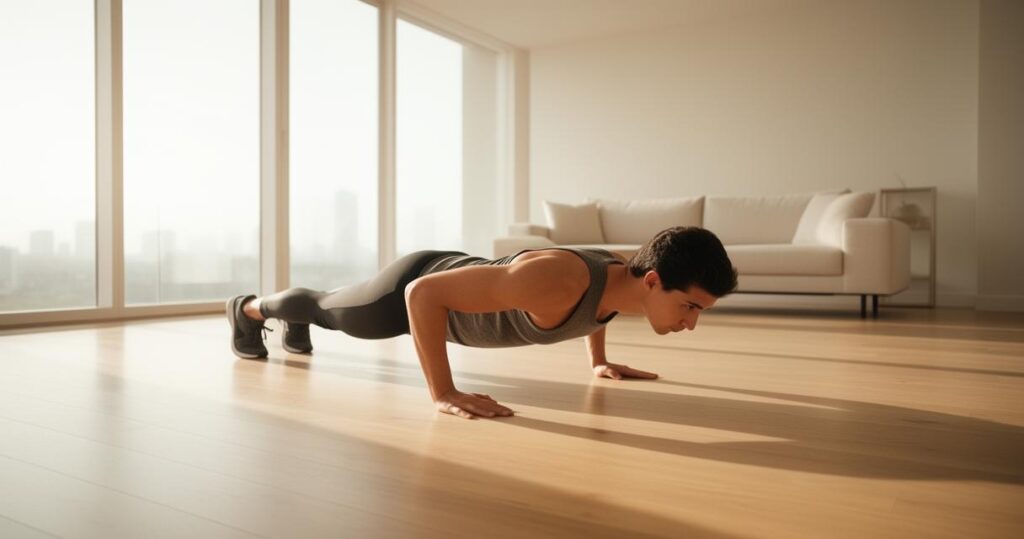
In the modern age of fitness, where gym subscriptions and elaborate equipment often dominate the conversation, there exists a refreshingly simple yet profoundly effective approach to physical training that requires nothing more than your own body. Calisthenics has emerged as the ideal sport for those seeking to strengthen and sculpt their physique from the comfort of their own home, offering a comprehensive workout solution that transcends the barriers of cost, space, and accessibility. This bodyweight training method not only delivers remarkable results in building muscle strength and endurance but also fosters a supportive environment where individuals can progress at their own pace whilst developing the discipline and consistency necessary for long-term fitness success.
Getting Started with Calisthenics: Essential Exercises and Equipment for Home Training
Fundamental Bodyweight Movements: Push-Ups, Pull-Ups, and Squats for Beginners
The foundation of any successful calisthenics journey rests upon mastering the fundamental movements that have stood the test of time. Push-ups represent perhaps the most recognisable and versatile exercise within the calisthenics repertoire, engaging the chest, shoulders, triceps, and core in a single fluid motion. For those just beginning their fitness journey, kneeling push-ups offer an excellent entry point, allowing newcomers to develop proper form and build foundational strength before progressing to full push-ups. The beauty of this exercise lies in its infinite adaptability, as practitioners can modify hand placement, elevation, and tempo to continually challenge themselves as their strength develops.
Pull-ups and chin-ups serve as cornerstone movements for developing upper body strength, particularly targeting the back, shoulders, and arms. Whilst these exercises may initially appear daunting to beginners, the progressive nature of calisthenics allows individuals to work towards these movements through modifications such as assisted variations or negative repetitions, where one focuses on the controlled lowering phase of the movement. This gradual approach ensures that even those starting with limited strength can systematically build the necessary muscle endurance and coordination to eventually perform these exercises with proper form and control.
Squats and lunges form the essential lower body components of a comprehensive calisthenics programme, engaging the quadriceps, hamstrings, glutes, and core muscles simultaneously. Beginning with half squats allows newcomers to develop the mobility and strength required for deeper ranges of motion, whilst side lunges introduce lateral movement patterns that enhance overall coordination and balance. These exercises not only build powerful legs but also contribute significantly to posture improvement and injury prevention by strengthening the supporting muscles around the knees and hips. The progressive challenge inherent in these movements ensures that as fitness levels advance, practitioners can increase depth, add variations, or incorporate explosive elements to continue stimulating muscle growth and strength development.
Setting up your home workout space: minimal equipment for maximum results
One of the most compelling advantages of calisthenics lies in its remarkable efficiency regarding space and equipment requirements. Unlike traditional gym-based training that demands access to numerous machines and weights, calisthenics thrives in minimal environments, requiring only enough space to perform basic movements safely. A typical home workout area measuring just a few square metres can accommodate the vast majority of calisthenics exercises, making this training method accessible to individuals living in flats, small homes, or shared accommodation where space comes at a premium.
The equipment requirements for effective calisthenics training remain remarkably modest, with many practitioners beginning their journey with absolutely no equipment whatsoever. For those seeking to expand their exercise repertoire, a simple pull-up bar represents the single most valuable investment, opening up an entire category of upper body exercises that would otherwise prove difficult to replicate. These bars can be mounted in doorways or attached to walls with minimal installation effort, providing a stable platform for pull-ups, chin-ups, and various hanging exercises that develop grip strength and core stability. Beyond this single piece of equipment, the world of calisthenics remains wide open, with exercises like push-ups, squats, planks, and burpees requiring nothing more than a willing participant and a safe surface.
Creating an effective home training environment extends beyond physical equipment to encompass considerations of safety, motivation, and consistency. Ensuring adequate clearance around the workout area prevents accidental collisions with furniture or fixtures, whilst proper flooring or exercise mats can provide cushioning for ground-based movements and protect both the practitioner and the floor surface. The psychological aspects of the training space should not be underestimated either, as establishing a dedicated area for exercise, even if small, helps create a mental association between that space and physical activity, thereby supporting the development of consistent training habits that prove essential for long-term success.
Progressive training techniques: building strength and sculpting your physique
Tailoring Sets and Repetitions to Your Individual Fitness Level
The adaptability of calisthenics to accommodate all fitness levels represents one of its greatest strengths, allowing complete beginners and advanced athletes alike to find appropriate challenges within the same basic framework. For those just embarking on their fitness journey, a recommended starting point involves performing between two and three sets of five repetitions for each exercise, training approximately two to four days per week. This conservative approach allows the body to adapt gradually to the new demands being placed upon it, reducing the risk of injury whilst building the foundational strength and movement patterns necessary for future progression.
As strength improves over the weeks and months of consistent training, practitioners can systematically increase the volume and intensity of their workouts to continue stimulating muscle growth and strength development. Studies have demonstrated that even relatively simple lower-body exercises performed consistently can lead to significant improvements, with participants showing muscle strength increases approaching fifteen percent over a ten-month period. The progression pathway typically involves first increasing repetitions within each set, working towards ranges of twelve to fifteen repetitions, before then adding additional sets or introducing more challenging variations of the exercises. This methodical approach ensures continuous improvement whilst maintaining proper exercise form and minimising the risk of overtraining or injury.
Understanding the relationship between workout frequency, volume, and recovery proves essential for maximising the benefits of calisthenics training. Whilst enthusiasm may tempt beginners to train daily, the body requires adequate rest periods to repair and strengthen muscle tissue. Most practitioners find that training three to four times per week provides an optimal balance between stimulus and recovery, allowing sufficient challenge to drive adaptation whilst providing the recovery time necessary for muscle development. As fitness levels advance, individuals may experiment with different training frequencies and volumes, but the fundamental principle remains constant: progressive overload achieved through systematic increases in difficulty, volume, or intensity drives continued improvement in strength and physique.
Engaging multiple muscle groups through compound calisthenics movements
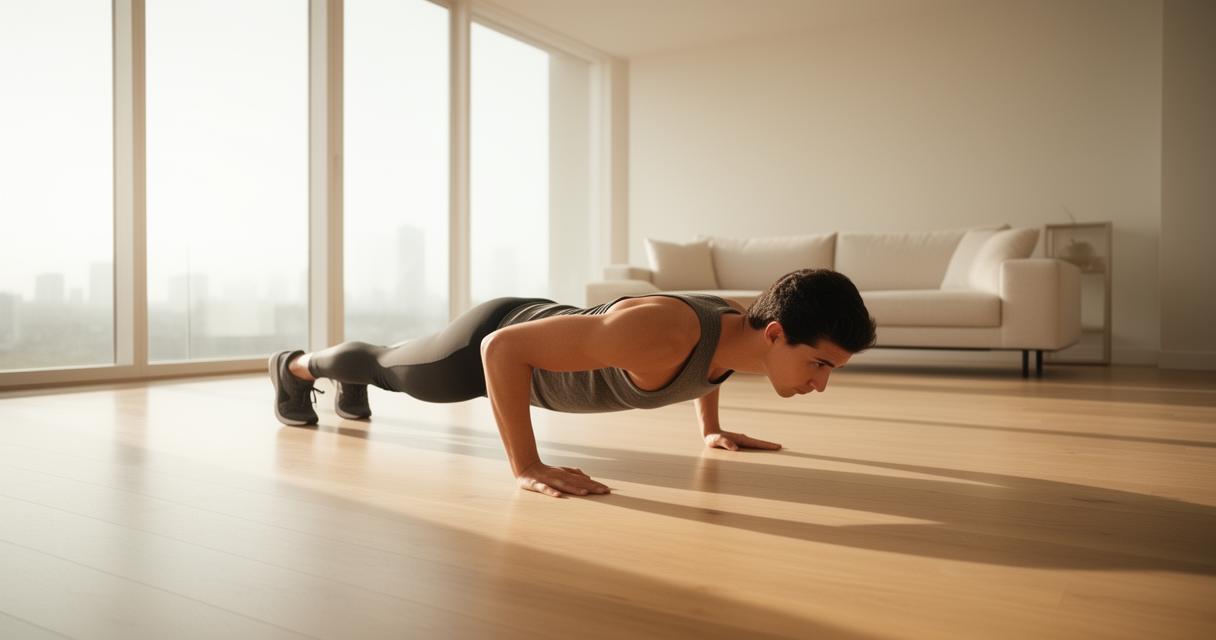
The compound nature of calisthenics exercises distinguishes them from the isolation movements common in machine-based gym training, offering superior functional benefits and efficiency. Rather than targeting individual muscles in isolation, exercises such as push-ups simultaneously engage the chest, shoulders, triceps, and core, creating a coordinated strengthening effect that translates directly to improved performance in daily activities and other physical pursuits. This integrated approach to strength training not only builds muscle more efficiently but also develops the intermuscular coordination and core stability that prove essential for maintaining proper posture and preventing injuries during both exercise and everyday movements.
Burpees exemplify the full-body engagement possible through well-designed calisthenics movements, combining elements of squatting, planking, push-ups, and jumping into a single fluid sequence. This exercise challenges virtually every major muscle group whilst simultaneously providing cardiovascular conditioning, making it an extraordinarily efficient use of training time. Research has shown that vigorous calisthenics exercises can provide cardiovascular benefits comparable to treadmill running, with a person of average weight burning significant calories during a thirty-minute session. The multi-faceted nature of these compound movements means that practitioners develop not only strength and endurance but also flexibility, coordination, and cardiovascular fitness within a single training session.
Planks and their variations demonstrate how isometric holds can engage multiple muscle groups simultaneously whilst developing the core stability essential for all physical activity. Unlike traditional sit-ups that focus primarily on the abdominal muscles, planks require the coordinated activation of the entire core musculature, including the deep stabilising muscles of the spine, the obliques, and the muscles of the lower back and hips. This comprehensive engagement creates functional strength that supports proper posture, reduces the risk of back pain, and provides a stable foundation for all other movements. By incorporating various plank positions and progressions, such as side planks or elevated variations, practitioners can systematically challenge their core strength whilst simultaneously developing shoulder stability and overall body awareness.
Creating your support network: maintaining motivation and achieving long-term fitness goals
Developing Muscle Strength and Endurance Without a Gym Membership
The elimination of gym memberships as a prerequisite for effective strength training represents a liberating shift in how individuals approach their fitness journeys. Calisthenics proves that substantial muscle development and enhanced endurance remain entirely achievable through bodyweight training alone, democratising access to physical fitness regardless of financial circumstances or geographical location. The effectiveness of this approach extends far beyond theoretical possibility, with practical evidence found in its adoption by military organisations and elite athletes who recognise the functional strength and resilience developed through bodyweight training. This proven track record demonstrates that the absence of expensive equipment or gym facilities need not limit one's physical development.
The COVID-19 pandemic served as a catalyst for widespread adoption of calisthenics, as gym closures forced millions to seek alternative training methods. This period of enforced home-based exercise revealed to many individuals that effective workouts need not depend on access to commercial fitness facilities or elaborate equipment. The simplicity and effectiveness of calisthenics became apparent as practitioners discovered they could maintain and even improve their strength, endurance, and physique using nothing more than their bodyweight and creativity. This shift in perspective has persisted beyond the immediate crisis, with many individuals choosing to continue their calisthenics practice even after gyms reopened, having discovered the convenience, cost-effectiveness, and genuine results this training method provides.
Building a sustainable home-based fitness practice requires understanding that muscle development through calisthenics follows the same fundamental principles as traditional weight training, merely applying them through different means. The progressive overload necessary for continued muscle growth comes not from adding weight to a barbell but from increasing repetitions, modifying exercise variations to increase difficulty, or adjusting tempo and rest periods to intensify the challenge. This approach offers unique advantages, as practitioners develop not only strength but also superior body control, balance, and coordination that weight training alone may not cultivate. The very low risk of injury associated with bodyweight exercises, combined with their adaptability to all fitness levels, makes calisthenics an ideal long-term training methodology that can evolve alongside the practitioner throughout their entire fitness journey.
Building Consistency and Progression in Your Home-Based Training Programme
Establishing and maintaining consistency represents perhaps the greatest challenge in any fitness endeavour, yet it proves absolutely essential for achieving meaningful long-term results. The convenience of home-based calisthenics training eliminates many common barriers to consistency, such as travel time to the gym, equipment availability, or operating hours, but it simultaneously introduces new challenges related to self-motivation and environmental distractions. Creating a structured weekly training plan that outlines specific exercises, sets, and repetitions for each workout day provides a roadmap that reduces decision fatigue and increases adherence. Many practitioners find success with templates that alternate between upper body, lower body, core, and cardio-focused sessions throughout the week, ensuring balanced development whilst allowing adequate recovery for each muscle group.
The psychological aspect of building a support network extends beyond physical training partners to encompass the mental frameworks and habits that sustain long-term commitment. Setting realistic short-term goals alongside ambitious long-term objectives creates a balance between immediate satisfaction and sustained motivation. Tracking progress through workout logs, photographs, or simple performance metrics such as maximum repetitions or exercise variations achieved provides tangible evidence of improvement that reinforces continued effort. This documentation serves not merely as record-keeping but as a personal support system, offering encouragement during inevitable plateaus and reminding practitioners of how far they have progressed from their starting point.
Combining calisthenics with complementary training modalities can enhance overall fitness whilst maintaining variety that prevents monotony. Incorporating mobility training ensures that strength gains do not come at the expense of flexibility, maintaining full ranges of motion that support both performance and injury prevention. For those seeking additional challenge as their calisthenics practice advances, integrating weight training elements through simple equipment such as dumbbells or resistance bands can provide new stimuli for muscle growth without abandoning the bodyweight foundation. This hybrid approach recognises that whilst calisthenics offers a complete training system, the principles of progressive overload and varied stimulation that drive adaptation can be enhanced through thoughtful supplementation. The key lies in maintaining the core benefits of calisthenics, its accessibility, low injury risk, and functional strength development, whilst strategically adding elements that support individual goals and preferences.